
Shop
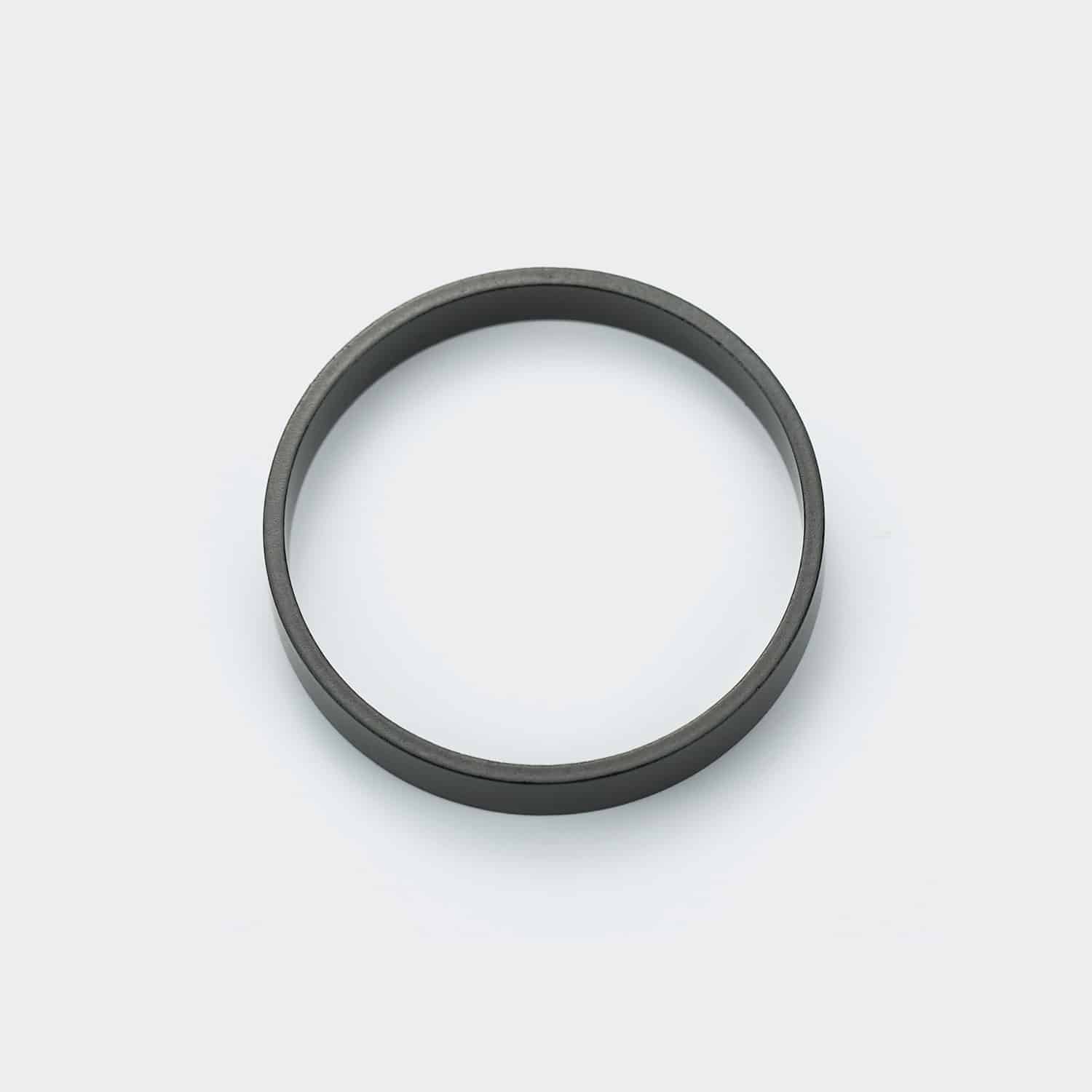

22-Pole Ring (High-Torque)
$ 2.69
22 Poles (11 Pairs), Zero Assembly Labor, High Torque Density We supply Custom Sintered Neodymium Rings featuring a high-density 22-Pole Magnetization pattern. Standard motors might use 4 or 8 poles. Meanwhile, high-precision applications often require 22 poles (11 North / 11 South). So they can achieve smoother rotation and higher torque at lower speeds. This 22-pole magnet is the ultimate manufacturing solution for Gimbal Motors and Servo Actuators. You press-fit a Single Solid Ring. Instead of manually gluing 22 individual arc segments onto a hub. It is labor-intensive and prone to balancing errors. This guarantees perfect pole spacing, zero adhesive failure. And a drastic reduction in assembly costs. Why 22 Poles? Why push for such a high pole count on a single ring? 1. “Buttery” Smooth Rotation (Low Cogging): The Physics: In an electric motor, fewer poles often mean “jerky” movement (cogging) at low speeds. The 22-Pole Advantage: By increasing the frequency of magnetic transitions (22 per revolution), you significantly reduce torque ripple. This is critical for Camera Gimbals and Steering Sensors where the movement must be perfectly smooth, not notched. 2. Torque Density: The Benefit: Higher pole counts generally allow for higher torque generation without needing a gearbox. This “Direct Drive” capability is why 22-pole rings are the standard for high-end drone motors and robotics joints. 3. Sensor Resolution: The Application: Magnetic Encoders. The Logic: A Hall Effect sensor reading a 22-pole ring detects 11 full sine waves per revolution. This offers significantly higher positional accuracy than a standard 2-pole or 4-pole trigger. Manufacturing Capability: Sintered vs. Bonded Do not confuse this with cheap “Bonded” magnets. The Challenge: It is technically difficult to create 22 distinct poles on a solid piece of Sintered Neodymium (the strongest magnet material). It requires a custom-wound High-Voltage Magnetizing Fixture. Our Solution: Many suppliers will try to sell you “Bonded Neo” (Plastic-mixed) for high pole counts because it is easier to make. Bonded magnets are weak. We specialize in Sintered N45/N50 multi-pole rings. We deliver the complex pole pattern without sacrificing the raw power you need for high-torque motors. Magnetization Styles We can orient the 22 poles in two ways: 1. Radial/Outer Diameter (OD) Multi-Pole: Configuration: The poles alternate N-S-N-S around the curved outside surface. Use Case: Internal Rotor Motors (the stator coils surround the ring). 2. Axial Multi-Pole: Configuration: The poles are sectors on the flat face (like slices of a pie). Use Case: Pancake Motors, Axial Flux Generators, and Angle Sensors. Ideal Applications Camera Gimbals: 3-Axis stabilization motors requiring ultra-smooth low-speed movement. Robotics: Joint actuators and servo motors. Encoders: Absolute magnetic encoders for industrial automation. Direct Drive Motors: High-torque, low-RPM fan or drone motors. Ordering Guide: The “Fixture” Factor Since 22-pole magnetization is not standard, we manufacture these to order. 1). Dimensions: OD x ID x Thickness. 2). Pole Orientation: “Are the poles on the OD (Curved side) or the Face (Flat side)?” 3). Application: “Is this for a Motor or a Sensor?” – Motor rings need high grade N48/N50; Sensors can use N35. 4). Fixture Fee: If we do not already have a 22-pole fixture for your specific diameter, a One-Time Tooling Fee applies to build the magnetizing coil.