
Shop
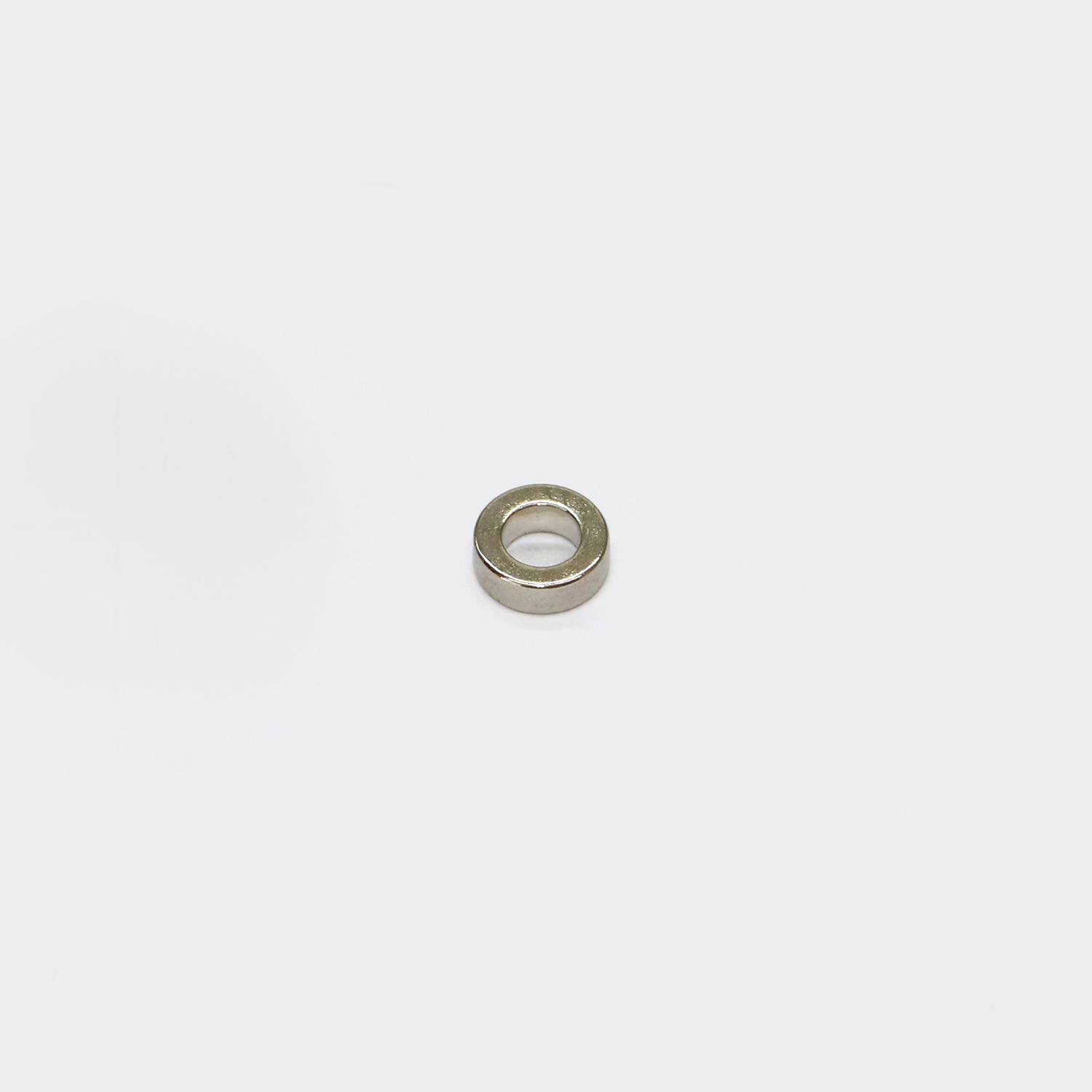

Small Ring Magnets – N52
$ 0.89
Grade N52, Precision ID/OD, High Flux Density We supply Small Neodymium Rings using the ultra-high N52 Grade material. A ring magnet offers unique mechanical utility for miniature applications. Such as precision sensors, micro-motors, or magnetic fasteners. However, the central hole reduces the magnetic volume. To compensate for this mass reduction, you can consider Grade N52. It is the strongest commercially available Neodymium. This ensures that the magnet generates the maximum possible holding force. Even it has a small footprint and a hollow center. So it is ideal for high-performance electronics and aerospace assemblies. Why N52 Rings? A ring shape solves mechanical problems, but N52 solves the power problem. 1. Compensating for the Hole: The Physics: A ring has roughly 20-40% less mass than a solid disc of the same size. The Solution: Upgrade the ring magnet from standard N35 to N52. You regain that lost magnetic flux. This allows you to secure the magnet mechanically (via a shaft or screw) without sacrificing holding power. 2. Shaft & Axle Mounting: The Application: Rotational sensors or robotic joints. The Precision: Our small rings are ground for high Concentricity. This ensures that it spins perfectly true without wobbling. So you can slide the magnet over a shaft properly. It is critical for accurate Hall Effect sensor readings. 3. Mechanical Fastening: The Benefit: A ring can be secured with a non-magnetic screw or pin. So you don’t have to glue the disc magnets. This provides a mechanical backup. Ensure the magnet never drops out of the assembly due to glue failure. Manufacturing Advisory: Wall Thickness N52 is strong magnetically, but brittle structurally. The “Hoop Strength” Rule: Small rings are prone to cracking if the wall is too thin. The Formula: Wall Thickness = (Outer Diameter – Inner Diameter) / 2. The Safe Limit: We recommend a minimum wall thickness of 1.0mm for N52 rings. The Risk: If you design a ring with a 0.5mm wall (e.g., 6mm OD x 5mm ID), it will likely shatter during assembly or shipping. If you need thin walls, we must use a specialized Low-Speed Slicing process to prevent breakage. Ideal Applications Position Sensors: Magnet placed on a rotating shaft to trigger a Hall sensor. Loudspeakers: High-performance miniature drivers (voice coil moves in the gap). Consumer Electronics: Magnetic latches secured by screws. Robotics: Joint angle sensing magnets. Ordering Guide: Critical Dimensions To quote small rings accurately, please define: 1). Dimensions: OD x ID x Thickness. 2). Magnetization Direction: – Axial: Top/Bottom faces are North/South, for holding/clamping. – Diametric: Curved sides are North/South, for rotational motors/sensors. 3). Tolerance: “Is this sliding over a precision shaft?” – We can hold ±0.02mm on the ID if required. 4). Temperature: “Will this device get hot?” – If >80°C, do not use N52. Ask for N48H.