
Shop
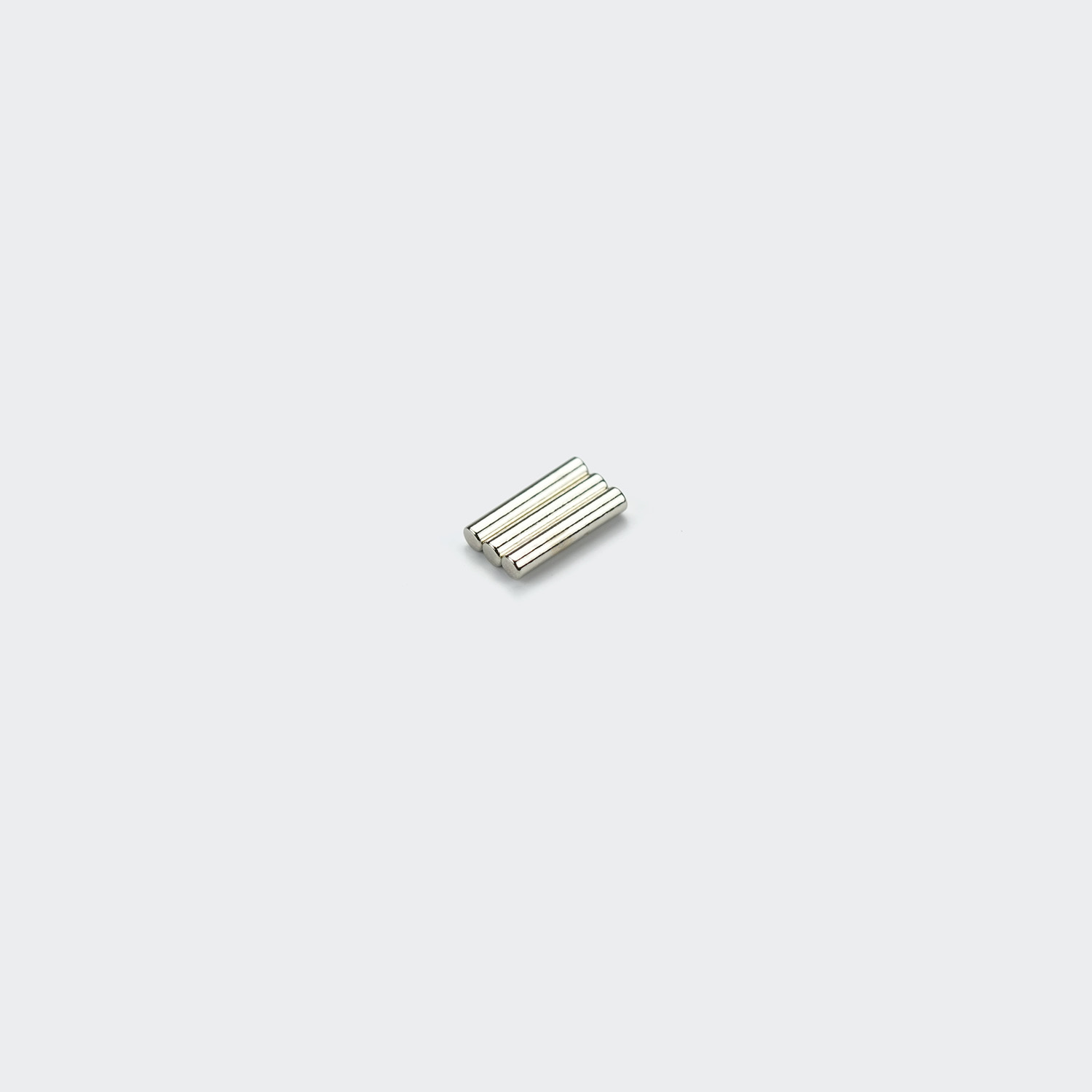

Tiny N52 Rod Magnets (1mm)
$ 0.89
We supply N52 Neodymium rod magnets with diameters as small as 1.0mm. Perfect for miniaturized electronics, medical devices, and precision sensors. These micro-magnets deliver maximum magnetic strength in the smallest possible size. Magnets this small require specialized manufacturing. We use high-precision slicing and micro-grinding (not standard cutting) to maintain strict dimensional tolerances. Every component meets rigorous industrial standards, no matter how small. Why N52 Grade? (Size vs. Power) At the micro-scale (1mm), volume is limited. To achieve functional holding force or sensor actuation, you need the strongest available material. Standard: – N52 (Maximum Energy Product). – This is our default recommendation for 1mm rods to maximize performance. High-Temp Options: – If your application involves soldering or high-heat environments (micro-motors), no problem. – We can supply N42SH or N35UH (stable up to 150°C-180°C) to prevent demagnetization. Dimensional Precision & Tolerances For 1mm parts, a standard tolerance of /- 0.05mm is often too large (that’s a 5% error!). So, we offer better – /- 0.005mm Diameter (Ø): 1.00mm ±0.005mm Length (L): 1mm – 50mm ±0.05mm Aspect Ratio: – Standard 1:1 to 1:10 Long Rods: – We can supply 1mm x 20mm rods – Note: Extremely fragile. Surface Coating: The “Thickness” Factor This is the #1 technical issue with micro-magnets. Standard Nickel plating adds ~15-20 microns, which can ruin a tight fit. We offer specialized coatings for micro-applications: Parylene (Recommended): – It is an ultra-thin (2–5 microns) vacuum deposition coating. Benefit: – It adds almost zero thickness to the 1mm diameter. – And provides superior waterproofing/biocompatibility (FDA approved for medical use). Gold (Ni-Cu-Ni-Au): – Excellent electrical conductivity. – Benefit: Ideal for magnetic pogo-pins, connectors, and PCB applications. Standard Nickel (Ni-Cu-Ni): – Durable, but adds approx. 0.015mm to the diameter. – Please account for this in your housing design and applications. Magnetization Direction Axial: – Magnetized through the length (North/South on the tiny flat ends). – Most common for sensors/actuators. Diametric: – Magnetized through the diameter (North/South on the curved sides). – Used for micro-rotors. Critical Production Note regarding Pole Marking: – Such micro rod magnet has very small surface. – We cannot print or laser mark polarity dots on 1mm magnets. Solution: We package them in “Row Packed” plastic tubes where all magnets are oriented in the same direction This allows for easy integration into your assembly lines. Packaging & Handling If you dump 1,000 1mm magnets in a bag, they become an unusable “magnetic sludge.” You must sell your packaging. We solve the handling headache of micro-magnets: Tube Packing: – Magnets are stacked in rigid plastic tubes. – This keeps them aligned and makes them easy to dispense one by one. Vacuum Trays: – For automated pick-and-place assembly machines. Anti-Static Bags: – Used for Parylene/Gold coated parts to ensure cleanliness. Non-Magnetic Tweezers: – We strongly recommend using plastic or ceramic tweezers for handling. – Metal tools will make installation nearly impossible. Application Examples – Electronics: Magnetic pogo-pin connectors. – Sensors: Hall effect triggers in smartwatches/wearables. – Medical: Catheter navigation tips (using Parylene coating). – Hobbies: Miniature wargaming models (weapon swaps) and RC micro-components. Ordering Guide To get a quick quote for 1mm rods, please confirm: 1). Length: (e.g., 1mm x 2mm, 1mm x 10mm). 2). Tolerance: Is standard ±0.05mm okay? Or do you need precision ±0.005mm? 3). Coating: Nickel, Gold, or Parylene? 4). Quantity: (Due to setup times, MOQ for micro-magnets is typically higher, e.g., 500 pcs).